Our Commitment
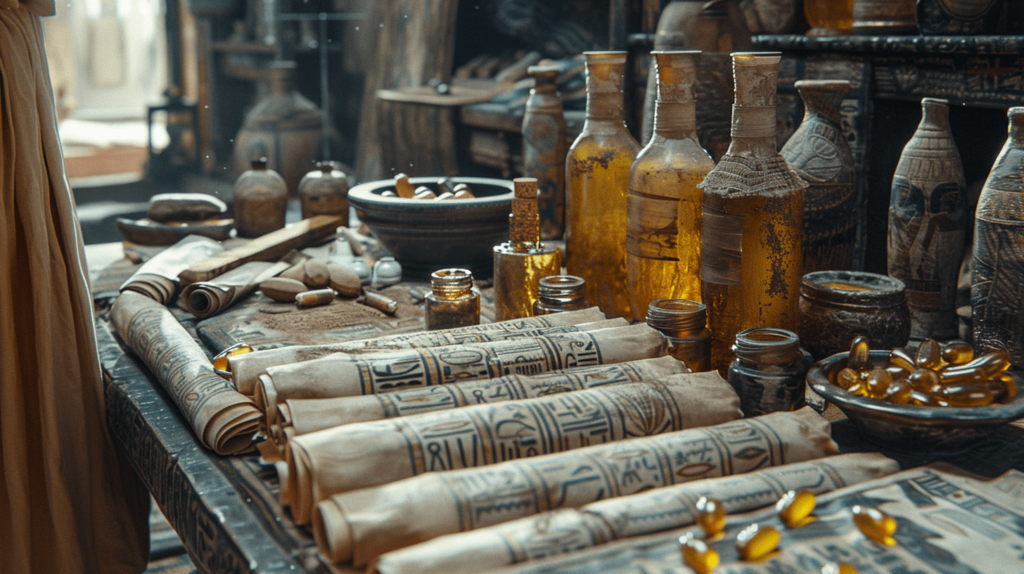
This wisdom is preserved in ancient papyrus scrolls, which document their advanced practices in anatomy, surgery, and the treatment of a wide array of diseases, including dental, gynecological, gastrointestinal, urinary disorders, and even diagnoses of diabetes and cancer. Notably, the Edwin Smith Papyrus, the Kahun Gynaecological Papyrus, and others offer in-depth insights into these practices, describing diseases, diagnoses, and an array of treatments that included herbal remedies and surgery, which shows a highly professional medical approach that was ahead of its time.
for instance, the ancient Egyptians utilized a unique pregnancy test around 1350 BCE, documented in the Berlin Papyrus, where the growth of wheat or barley seeds, after being urinated on, indicated a potential pregnancy. This method has been validated by modern studies to have a surprisingly high accuracy rate of 70-85%. Did you know that their medical insights traveled beyond the borders of Egypt? Yes, they did! They influenced nearby cultures and had a significant effect on Roman and Greek medical traditions. It’s interesting that even Hippocrates, often called the father of medicine, found inspiration in the wealth of knowledge accumulated by the Egyptian pharaohs. Their legacy in medicine was a holistic approach. They considered both the body and the mind. Imagine living in a time when medical practices were evolving rapidly, and Egypt was at the forefront of this evolution. Their contribution to medicine is not just a chapter in history books – it’s a living, breathing part of our medical heritage.